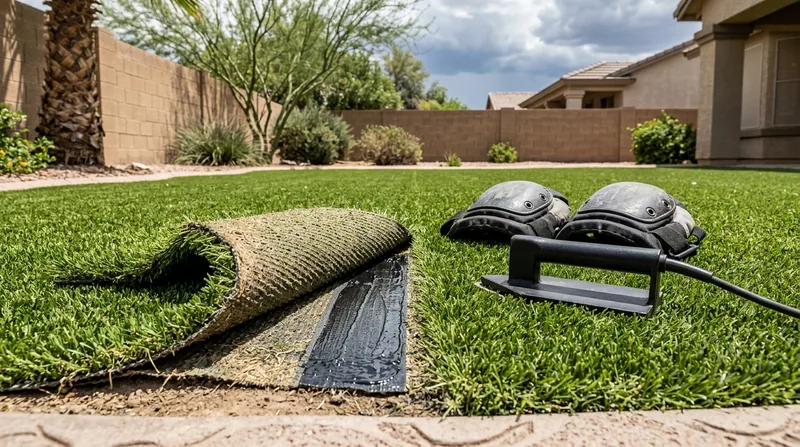




Synthetic turf in Glendale takes a beating. Monsoon gusts split seams along the property line; summer heat and window glare melt patches into the infill; foot traffic in pet runs and high-use zones flattens the pile; and the dust storms that roll in from the White Tank Mountains leave buildup that settles into the backing. When damage strikes a 1970s ranch home in central Glendale, a newer subdivision near Westgate, or a lake-view property in Arrowhead Ranch, turf repair and seam repair brings the lawn back to invisible. We cut out the damaged section, match the pile direction of the new piece to the existing turf, glue and tape the seams, re-infill to grade, and walk away. The patch disappears. Since 2013, we have repaired hundreds of Glendale lawns damaged by weather, use, and accident. A free estimate is one call away at (623) 755-9278.
Why Turf Damage Happens Fast in Glendale: Heat, Wind, and Monsoon Season
Glendale's West Valley climate and monsoon season create conditions that stress synthetic turf. Summer highs above 115°F soften infill and can warp seams if they were not sealed correctly during installation. Monsoon wind gusts, particularly in July and August, can lift or split seams that run perpendicular to the wind direction. Window reflections from neighboring two-story homes can concentrate heat and melt a spot into the pile. Pet urine and high-traffic zones flatten the turf fibers over time, and dust storms deposit fine silt that traps moisture and accelerates wear. Even well-installed turf eventually shows damage, and fast repair prevents the problem from spreading into the base or the surrounding lawn.
- Monsoon winds in July and August split seams that are not fully bonded or sealed.
- Summer heat above 115°F can warp or soften seams and lift the edges of installed sections.
- Window glare from neighboring homes melts small patches into the pile and infill.
- Pet urine and foot traffic flatten the pile and create visible lanes and bald spots.
- Dust storms deposit silt that traps moisture and accelerates fiber breakdown in high-traffic areas.
Catching damage early and repairing it quickly prevents water from pooling under the turf or the base from settling unevenly. A small seam repair today stops a major replacement job tomorrow.
Key info: Glendale's monsoon season runs June through September, with peak wind gusts in July and August. If your seams split or edges lift during monsoon weather, call for repair before the next dust storm drives silt into the backing. Homes in North Glendale near Luke Air Force Base and West Glendale near Westgate are exposed to stronger gusts and see more seam damage during peak season.
For more on how to keep your turf in top condition year-round, see our guide to turf cleaning and pet odor treatment.
How We Repair Turf and Seams: Step-by-Step in Glendale
Turf repair follows a precise sequence. We inspect the damage, identify the pile direction and product specifications, cut out the damaged section with clean edges, source or retrieve a matching piece, prepare the base, glue and tape the seams, infill to grade, and brush the repaired area until it blends with the surrounding turf. The entire process takes skill and attention to detail. A seam that is not glued or taped correctly will fail again in the next monsoon. A patch that is not infilled to grade will trap water or look sunken. We do the work once, correctly, so you do not have to call again.
- We assess the damage on site and photograph the pile direction and surrounding turf to ensure a perfect match.
- We cut out the damaged section with a utility knife or seaming tool, removing all compromised material down to the base.
- We source or retrieve a new piece of matching turf, cut to size, and lay it in the opening.
- We apply seam adhesive to the backing and press the new section firmly into place for full contact.
- We tape the seams with reinforced seam tape, pressing firmly to create a waterproof bond.
- We apply infill material (sand, zeolite, or cooling blend) to match the depth and density of the surrounding lawn.
- We brush and comb the repaired area to blend the pile direction and hide all traces of the patch.
The repair is complete when the seams are invisible and the infill is level with the surrounding turf. On a 50-square-foot patch in a central Glendale ranch home, this work typically takes 2 to 4 hours depending on the seam length and base condition.
Example: A homeowner in West Glendale near Arrowhead Ranch noticed a 3-foot-long seam split after a monsoon gust. The split ran the full width of the backyard turf, and water was pooling beneath it. We cut out a 4-foot by 8-foot section, replaced it with matching turf, sealed both seams with adhesive and tape, re-infilled with zeolite, and brushed the patch. The repair took 3 hours. The seam is now invisible, and the lawn is level and draining properly.
For a broader look at how we handle residential artificial grass installation and the turf choices available, visit our residential page.
Repair Methods and When to Use Each
| Repair Method | Description | Best For |
|---|---|---|
| Seam Repair Only | We clean, re-glue, and re-tape existing seams without removing turf. The adhesive is reactivated or replaced, and the seam is pressed and taped until fully bonded. | Seams that have lifted or failed but the turf itself is not damaged; split seams from monsoon wind; loose edges after installation settling. |
| Patch Replacement | We cut out the damaged section, remove it, and install a new piece of matching turf. The new piece is glued, taped, and infilled to match the surrounding lawn. Pile direction is matched and the seams are sealed with adhesive and reinforced tape. | Melted spots from window glare; torn or punctured turf; areas with permanent stains or discoloration; pet damage; chemical burns. |
| Edge Lifting Repair | We lift the edge of the turf, inspect the base for settling or water damage, re-level the base if needed, reapply adhesive to the backing, and press the edge firmly back down. The perimeter is taped and infilled. | Edges that have lifted away from the base after monsoon wind or ground settling; turf that is curling at the perimeter; water pooling under the edge. |
| Full Section Replacement | For damage spanning a large area or affecting multiple seams, we remove the entire section, inspect and repair the base if needed, and install new turf with all seams sealed and infilled to grade. | Large melted areas; extensive monsoon damage; water damage to the base; multiple failed seams in one area; pet damage affecting a wide zone. |
| Infill Top-Up and Brush | We add fresh infill to areas where sand or zeolite has settled or compacted, level it to match the surrounding turf, and brush the pile to restore texture and appearance. No turf removal is needed. | Flattened lanes from pet traffic; areas where infill has migrated or settled; turf that looks matted or worn but is not torn; seasonal maintenance in high-use zones. |
Turf Repair and Seam Repair Cost in Glendale: What to Expect
The cost of turf repair depends on the size and type of damage, the length of seams to be sealed, the turf product and infill type, and the accessibility of the work area. A small seam repair on an existing lawn starts at $350. A full patch replacement on a 50-square-foot area typically runs $500 to $800. Large repairs affecting multiple seams or requiring base work can reach $1,500 or more. We measure and estimate on site, and the final price reflects the actual scope, materials, and labor needed. Travel to your home in Glendale, North Glendale, Central Glendale, or West Glendale is included; there is no separate mileage fee.
Several factors move the cost up or down. A seam repair in a backyard with easy access is faster and cheaper than one requiring equipment or careful maneuvering around a pool surround or patio. If the base has settled or is damaged, we must level and compact it before installing new turf, adding time and cost. If your turf is a premium product with a high face weight or specialty infill, replacement pieces may cost more. If the damaged area is large or the seams are numerous, the job takes longer and costs more. We provide a written estimate on site, with no obligation to book.
For a detailed pricing breakdown covering all our services and typical job sizes, visit our full pricing page.
Turf Repair and Seam Repair Near Me: What Glendale Homeowners Should Know When Hiring
Hiring the right turf installer for repair work matters. Turf repair requires precision, knowledge of seaming techniques, and access to matching materials. Before you call, understand what separates a professional repair job from a quick fix that will fail in the next monsoon. Ask potential installers for a certificate of insurance naming general liability and workers' compensation. Request a written specification that names the turf product, face weight, pile height, infill type, and base depth so you know exactly what you are getting. Check references and photographs of finished repairs. If you have an HOA, confirm that your repair plan meets architectural guidelines before work begins. We are fully insured, provide written specs for every job, and carry references from hundreds of Glendale homeowners. Call us at (623) 755-9278 for a free estimate, or visit our contact page to request a quote.
When comparing repair quotes, watch for red flags. If an installer offers a price over the phone without seeing the damage, that estimate is a guess. If they cannot name the turf product or infill type, they do not know what they are repairing. If they do not offer a written warranty on the repair work (typically one to three years on seams and installation), they are not standing behind their work. A professional turf installer will spend time on site, ask questions about how the damage occurred, and provide a clear, written estimate with a timeline and warranty.
Glendale's monsoon season and extreme heat put stress on seams and infill. If your turf is more than five years old and seams are splitting regularly, a repair may extend the life of the lawn, but full replacement might be more cost-effective in the long run. We can advise you on that choice during your free estimate. For information on turf removal and replacement, see our turf removal and lawn conversion page.
Turf Repair & Seam Repair in Glendale: Pricing Guide
| Service | Price | Details |
|---|---|---|
| Seam repair or re-seal | Starting at $350 | Seam cleaning, adhesive reapplication, tape seal, and infill top-up; cost increases with seam length and number of seams |
| Patch replacement (up to 50 sq ft) | Starting at $500 | Damaged section removal, new turf installation, seam sealing, and infill; cost varies with turf product, base condition, and accessibility |
| Edge lifting repair | Starting at $400 | Perimeter edge re-glue, base inspection and leveling if needed, tape seal, and infill; larger perimeters or base damage may increase cost |
| Large section or complex repair | On estimate | Multiple seams, base work, or damage exceeding 100 sq ft requires on-site assessment to determine material and labor cost |
| Travel and estimate | Free and included | No mileage fee in Glendale and surrounding areas; free written estimate with no obligation to book; response within 24 hours |
Indicative pricing, the exact cost depends on square footage, finish, and site access. Free personalized estimate within 24h at (623) 755-9278.


