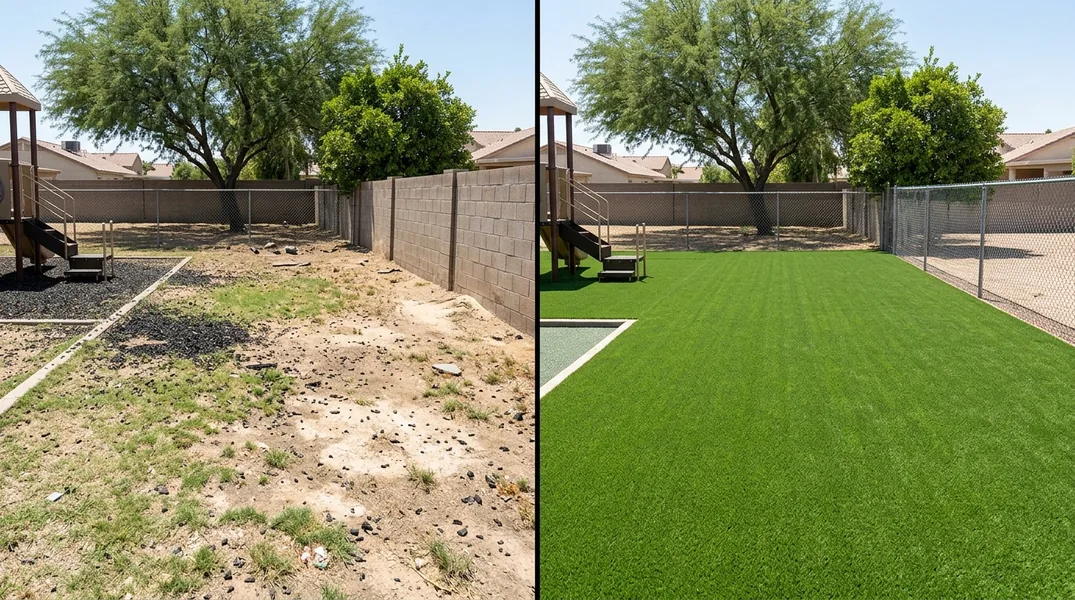
Why Caliche Base Prep Matters for Artificial Grass in Glendale
If you own a home in Glendale, you already know that caliche is everywhere. This hard, calcium-carbonate layer sits just beneath the soil and creates a real challenge for landscaping projects, especially when installing artificial turf. Many homeowners assume they can simply lay artificial grass directly over caliche, but that approach leads to poor drainage, standing water after monsoons, and a turf installation that fails prematurely.
The foundation of your artificial grass installation is just as important as the turf itself. Proper Residential Artificial Grass Installation requires careful attention to what lies beneath the surface. When caliche is not properly addressed, water has nowhere to go, creating puddles and saturated soil that can damage the turf backing and encourage mold growth. This is especially critical in North Glendale and surrounding areas where monsoon season brings heavy downpours in a short time frame.
Understanding What to Put Under Artificial Grass: The Complete Base System
When it comes to Glendale yards built on caliche, the layering strategy is essential. The first step is removing or breaking up the caliche to allow water penetration. Simply grinding it down is not enough; you need to create a proper drainage pathway. After breaking up the caliche, the next layer should be a permeable geotextile fabric that prevents soil from mixing with your base material while still allowing water to flow through.
On top of the geotextile, you'll need a quality base material, typically crushed limestone or recycled asphalt. This layer should be compacted to about 2 to 3 inches and serves as both a stable foundation and a drainage medium. Many homeowners wonder what to put under artificial grass beyond these basics, and the answer includes a professional-grade artificial grass underlay. This underlay acts as a shock pad, improves drainage, and provides cushioning for foot traffic. The combination of proper base prep, underlay, and quality turf creates a system that will withstand Glendale's intense sun and monsoon weather for years to come.
Artificial Grass Underlay: Choosing the Right Material for Desert Drainage
The artificial grass underlay is not just a comfort feature; it is a critical drainage component that protects your investment. In Glendale's desert climate, where caliche naturally impedes water flow, the underlay must be engineered to move water away from the turf backing quickly. Quality underlays are made from recycled rubber, foam, or polyurethane and are rated by their water permeability. Look for underlays with a water permeability rating of at least 60 inches per hour, meaning water passes through rapidly rather than pooling.
Many homeowners ask about the relationship between underlay thickness and drainage performance. Thicker is not always better when it comes to desert installations. A 3/8-inch to 1/2-inch underlay provides excellent cushioning and drainage without creating a spongy feel or trapping moisture. The underlay also protects the turf backing from direct contact with the base material, which can cause premature wear and deterioration. When you invest in Residential Artificial Grass Installation with proper underlay selection, you are protecting your yard against the unique challenges of Arizona's climate.
Turf Base Prep: Step-by-Step Process for Glendale Installations
Proper turf base prep begins with a site inspection and assessment of existing caliche depth and condition. The first physical step is to break up the caliche layer using specialized equipment that fractures it without creating massive dust clouds. In many cases, a portion of the caliche is removed entirely, especially in areas where it sits higher than surrounding ground. This excavation prevents future settling and ensures an even, stable surface for your artificial grass.
After caliche removal or breaking, the area must be graded to ensure proper slope for water drainage. A minimum 1 to 2 percent slope away from structures is standard, though in Glendale's monsoon season, many professionals recommend slightly steeper grades. Next, the geotextile fabric is laid down to create a barrier, followed by the base material layer. This base is then compacted using a plate compactor to create a firm, stable foundation. Finally, the artificial grass underlay is installed, and the turf is rolled out and secured. Each step in the turf base prep process is essential to the longevity and performance of your installation, especially in areas prone to heavy seasonal rainfall.
Monsoon Drainage Solutions: Protecting Your Artificial Grass Installation
Glendale's monsoon season brings intense rainfall in a compressed timeframe, and artificial grass drainage becomes a critical factor in system success. Proper drainage starts with the base prep work described above, but it also includes strategic installation of drainage features. French drains or perimeter drainage channels may be necessary if your yard is in a low-lying area or surrounded by caliche that directs water toward your turf. These features channel excess water away from the artificial grass and toward appropriate drainage areas or storm drains.
The slope of your yard plays a major role in monsoon drainage performance. During heavy rains, water should flow quickly away from the turf surface and through the base layers without pooling. If your property has flat areas or depressions, the installation team may need to add swales or adjust grading to improve water movement. Additionally, the edges of the artificial grass installation should be sealed with professional-grade edging that prevents water from seeping underneath and destabilizing the base. When you work with experienced installers who understand Glendale's specific drainage challenges, your artificial grass will remain in excellent condition even after the most intense monsoon downpours.
Residential Artificial Grass Installation Cost in Glendale: What to Budget
The cost of artificial grass installation in Glendale varies based on several factors, with turf base prep and drainage solutions being significant cost drivers. A basic installation without caliche removal might run lower, but skipping proper base preparation is a false economy that leads to costly repairs down the road. When caliche must be broken up or removed, when extensive grading is needed, and when professional-grade underlay and drainage features are installed, the project cost reflects the quality and durability you are paying for.
To get an accurate understanding of pricing for your specific project, Glendale Turf Installation offers a free site assessment and estimate. The team will evaluate your caliche conditions, drainage needs, yard size, and turf quality preferences to provide a transparent quote. Factors that influence cost include the square footage of your yard, the depth and extent of caliche, the quality tier of artificial grass you select, and whether you opt for additional features like Pet Turf & Dog Run Installation or Pool Surround Turf. Investing in proper base prep now prevents expensive repairs and replacements later, making quality installation a smart long-term investment for your Glendale home.
When to Call Residential Artificial Grass Installation Professionals Near Me
While some homeowners attempt DIY artificial grass projects, the complexity of caliche management and drainage in Glendale makes professional installation the wise choice. Breaking up caliche requires specialized equipment, and improper technique can damage underground utilities or create uneven surfaces. Additionally, professionals have the experience to diagnose drainage issues that might not be obvious to an untrained eye, such as subsurface water flow patterns or areas prone to saturation.
If you are considering artificial grass for your Glendale yard and have caliche on your property, now is the time to reach out to Glendale Turf Installation. The team can answer your questions about artificial grass drainage, base preparation, and underlay options specific to your property. Call (623) 755-9278 today or visit the website to schedule a free estimate. With proper planning and professional installation, your artificial grass will provide a beautiful, low-maintenance outdoor space that handles everything Glendale's climate throws at it.
Looking for a professional artificial grass installation company in Glendale? Glendale Turf Installation responds fast for all your artificial grass installation needs.
Get a Free Quote